How Long Does a Water Heater Last?
Quick answer
A tank water heater usually lasts 10 to 15 years and a tankless unit about 20, according to the U.S. Department of Energy. In Marin, the ones that die early usually go because of high water pressure, a sloppy install, or years without a flush. Hard water is rarely the reason up here. Age tells you when to start planning. It won't tell you the month yours quits.
Most people don't think about the water heater until the shower runs cold or there's water on the garage floor. Then the first thing they want to know is how much time the old one has left.
I'm Glenn, and I own Big Island Plumbing. I spent about five years as a carpenter before I got into plumbing, I read the whole codebook when I did, and I've had my C36 license since 2017. My partner Tai runs the field work here in Marin. Nobody at our company is on commission, so if I tell you your heater has a few good years left, that's just what I think.
Here's the straight answer, and then the part that matters more: what decides where your heater lands in the range.
How long each type of water heater lasts
| Type | Typical life |
|---|---|
| Tank, gas or electric | 10 to 15 years |
| Tankless | About 20 years |
Those numbers come from the U.S. Department of Energy. You'll also see sites quote 8 to 12 years for a tank, and they aren't wrong. The range is wide because the same heater can have a very different life in two different houses. In Marin, a handful of things decide which end of it you get.
What shortens a water heater's life in Marin
Water pressure
This is the one I find the most, and nobody knows they have it. A customer calls because a little flex hose blew off. I can fix the hose, but if the house is sitting at 100 PSI or more, it's going to happen again. That same pressure is pushing on the tank and every connection around it all day long. I check pressure on every visit for exactly this reason. When it's high, a pressure regulator is the real fix, and it protects the whole house along with the heater.
Nowhere for the water to expand
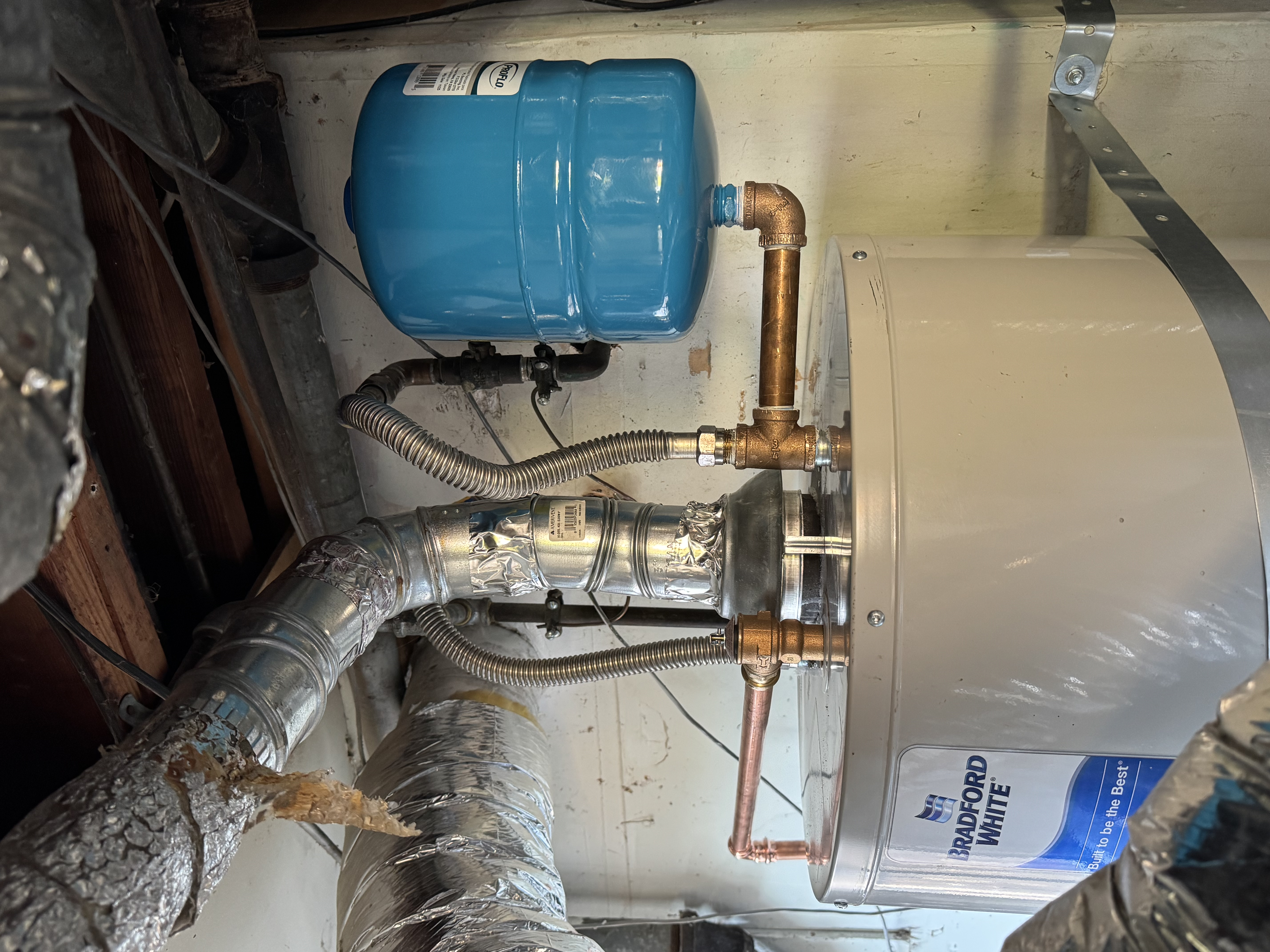
Water gets bigger when it heats up. Once a house has a regulator or a check valve on the main line, that extra volume has nowhere to go but back against the tank. A thermal expansion tank gives it somewhere to go. We add one on our water heater installs where the system calls for it, and a missing one is one of the first things I look for on an older heater.
The install itself
A lot of early failures trace back to the day the heater went in. On a gas unit I want new shutoff valves, a gas flex line with a sediment trap, earthquake straps, and the T&P drain run out to an approved spot. When one of those gets skipped, the heater pays for it later, and so do you.
Sediment and the anode rod
Minerals settle at the bottom of a tank over the years. That layer sits between the burner and the water, so the heater works harder for less hot water. Inside the tank there's also an anode rod, a piece of metal that corrodes on purpose so the tank walls don't. Once the rod is used up, the tank is next. A yearly flush and a look at the anode rod is the cheapest life you can buy a water heater.
This August we flushed a tank and replaced the anode rod for a homeowner in San Rafael who was having water quality issues. It's a short visit, and it's how a heater gets its full run.
Water where it doesn't belong
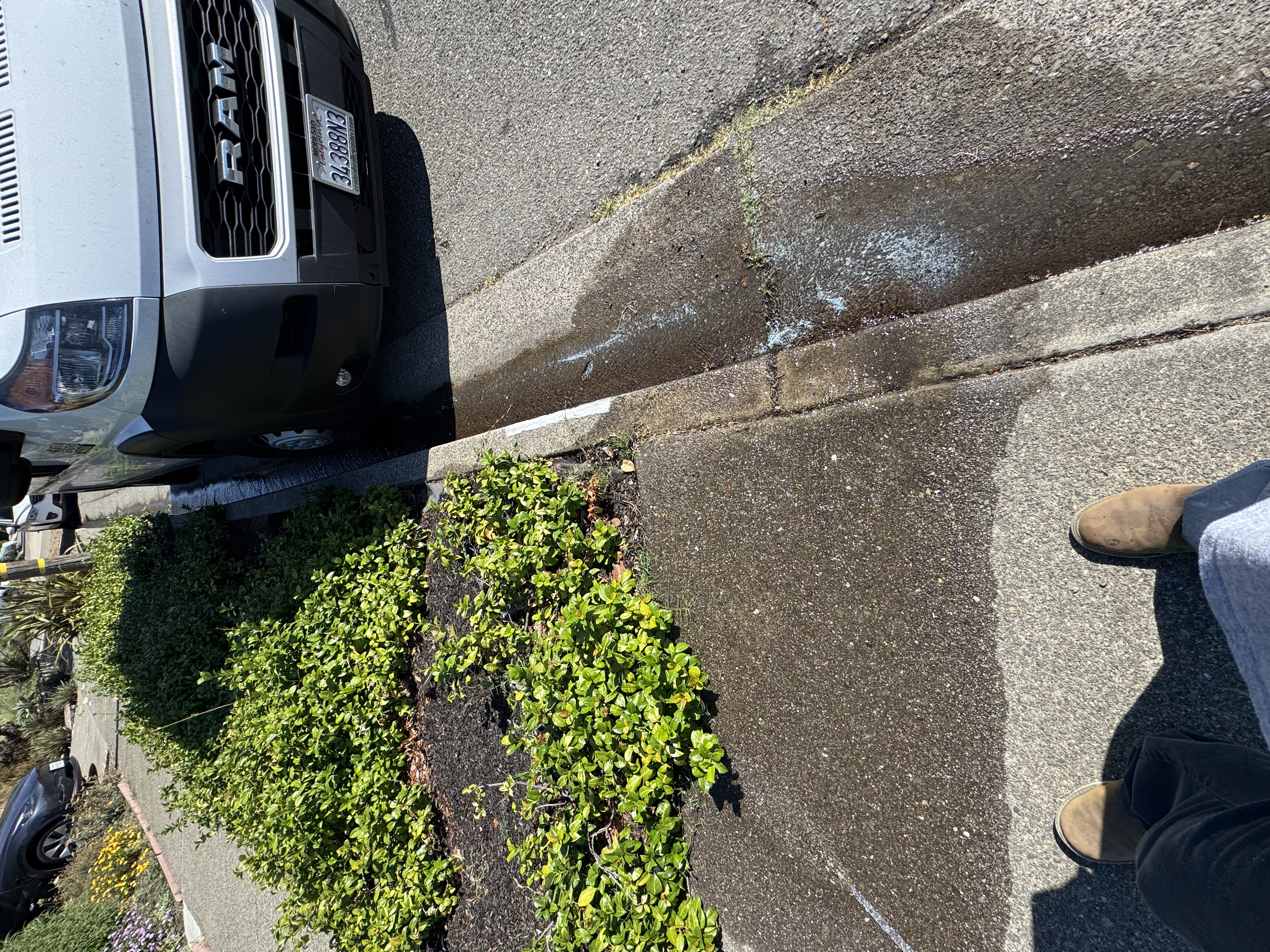
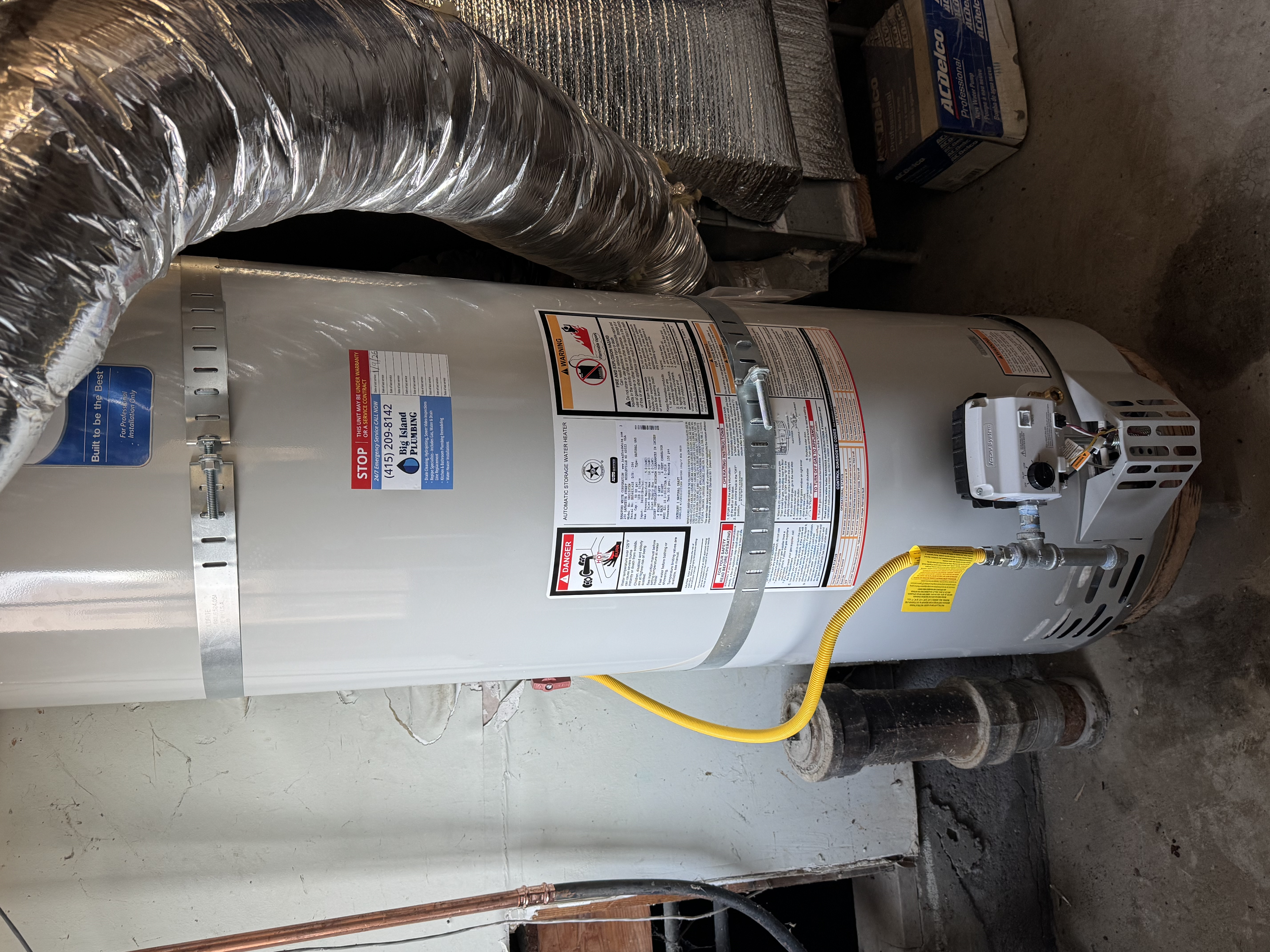
Sometimes age has nothing to do with it. This January we replaced a heater that was about a year old. It had been sitting in floodwater. The homeowner had been through other plumbers and wasn't expecting much. Afterward she wrote:
"They gave me an explanation as to why we may not want to spend the money to try fixing the existing one."
Mrs. Lazz, Google review
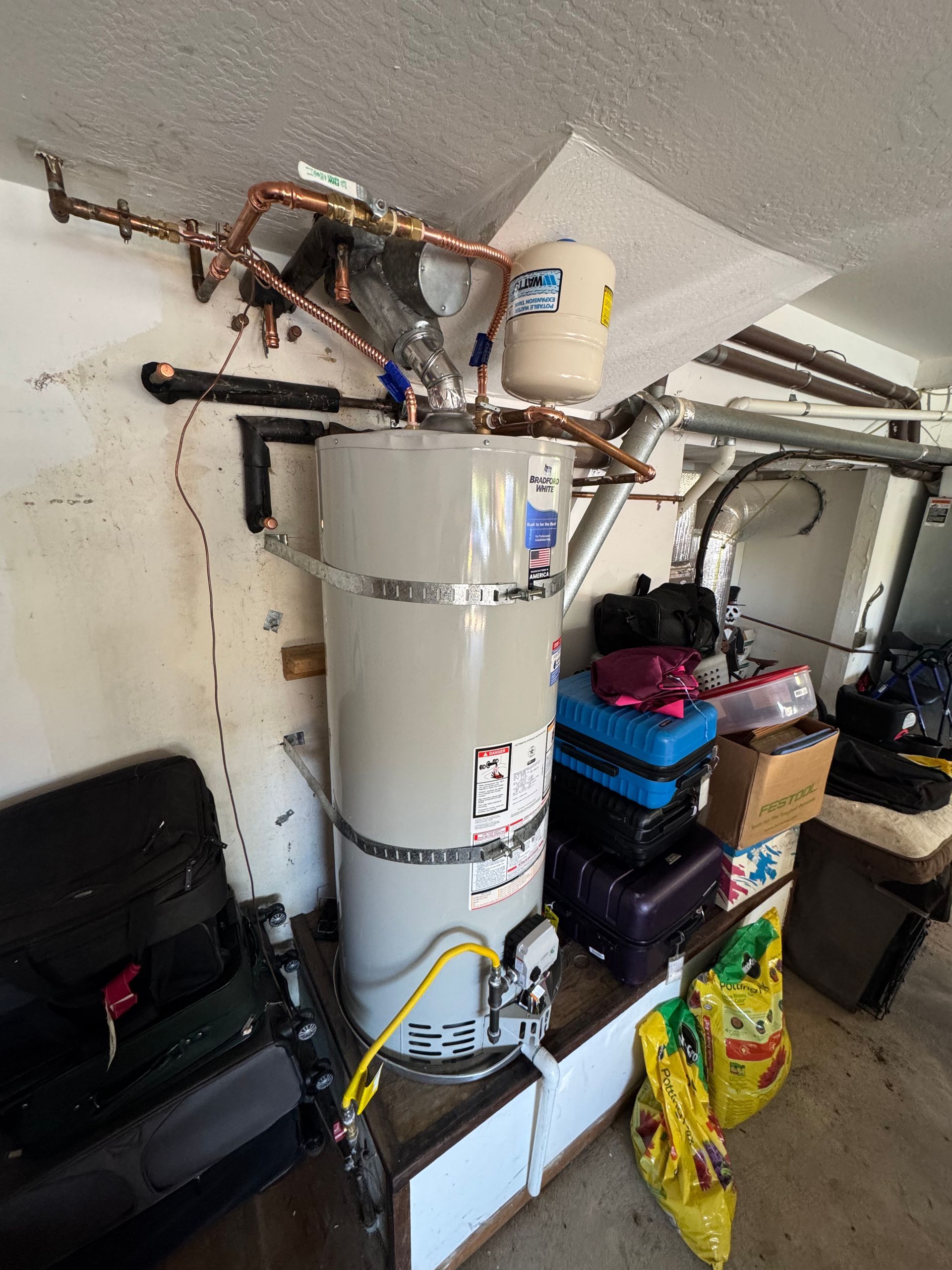
She also noticed we checked her water pressure, which nobody else had done. We put in a Bradford White 50 gallon gas unit with new water and gas shutoffs, a sediment trap, earthquake straps, and a thermal expansion tank.
What usually isn't the problem up here
Hard water eats water heaters in a lot of places. Marin isn't one of them. In Southern California a lot of homes need a water softener. Up here we almost never install one, because the water's good. So when a tank dies young in Marin, I look at pressure, the install, and maintenance before I blame the water.
Signs your water heater is on the way out
- Water pooling at the base, or rust and seepage on the tank itself
- Rusty or discolored hot water
- Running out of hot water sooner than it used to
- Rumbling or popping while it heats, which is usually sediment
- It's past 10 years old and you've already paid for a repair or two
A leak from the tank wall is the one with no debate. Once the tank itself goes, there's nothing left to fix. Everything else on that list is worth a look before you decide anything.
Repair it or replace it
If the heater is under about eight years old and one part failed, repair usually makes sense. On a lot of these calls I'll say something like: you can try the gas control valve, it may work, and it'll be about half the cost. But if the tank is near the end anyway, that money could have gone toward a new one. I'll lay out the options. It's your call.
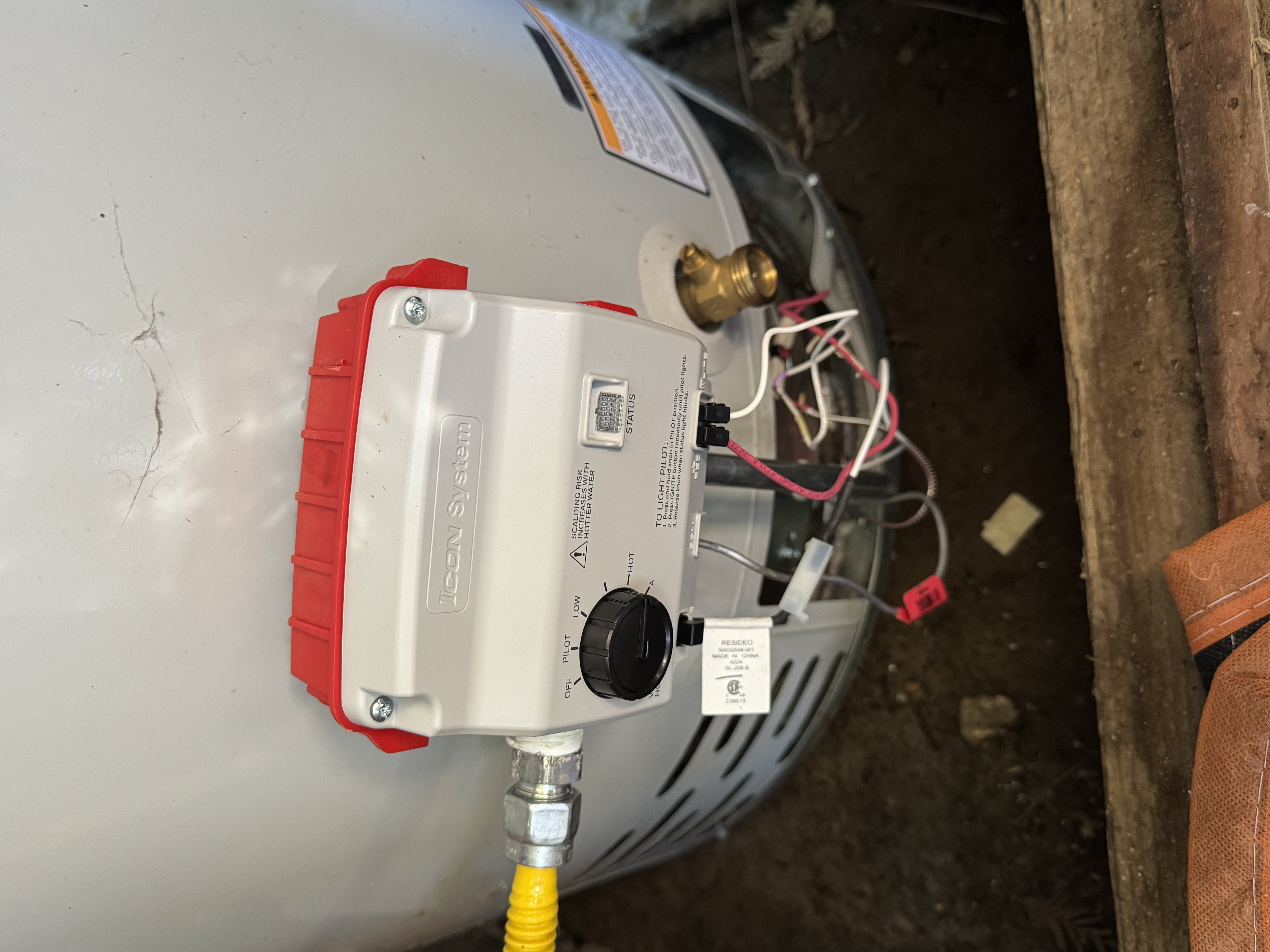
That Woodacre homeowner put it simply in her review: "When my water heater broke, they came right away to replace the valve." One part, one visit, and the heater stayed.
| Work | What it covers | Cost |
|---|---|---|
| Common part replacement | Thermocouple, T&P valve, expansion tank, single thermostat, tank flush | $215 to $430 |
| Larger component work | Anode rod, pilot assembly, burner assembly, heating elements | $430 to $550 |
| Major repair | Gas control valve, full electric rebuild | $550 to $800 |
| New tank water heater | Installed, with permit and haul-away of the old unit | $2,800 to $3,200 |
You get the number before any work starts. For the full breakdown on replacement, tankless, and upgrade options, see what a water heater replacement costs in Marin County.
Recent water heater jobs
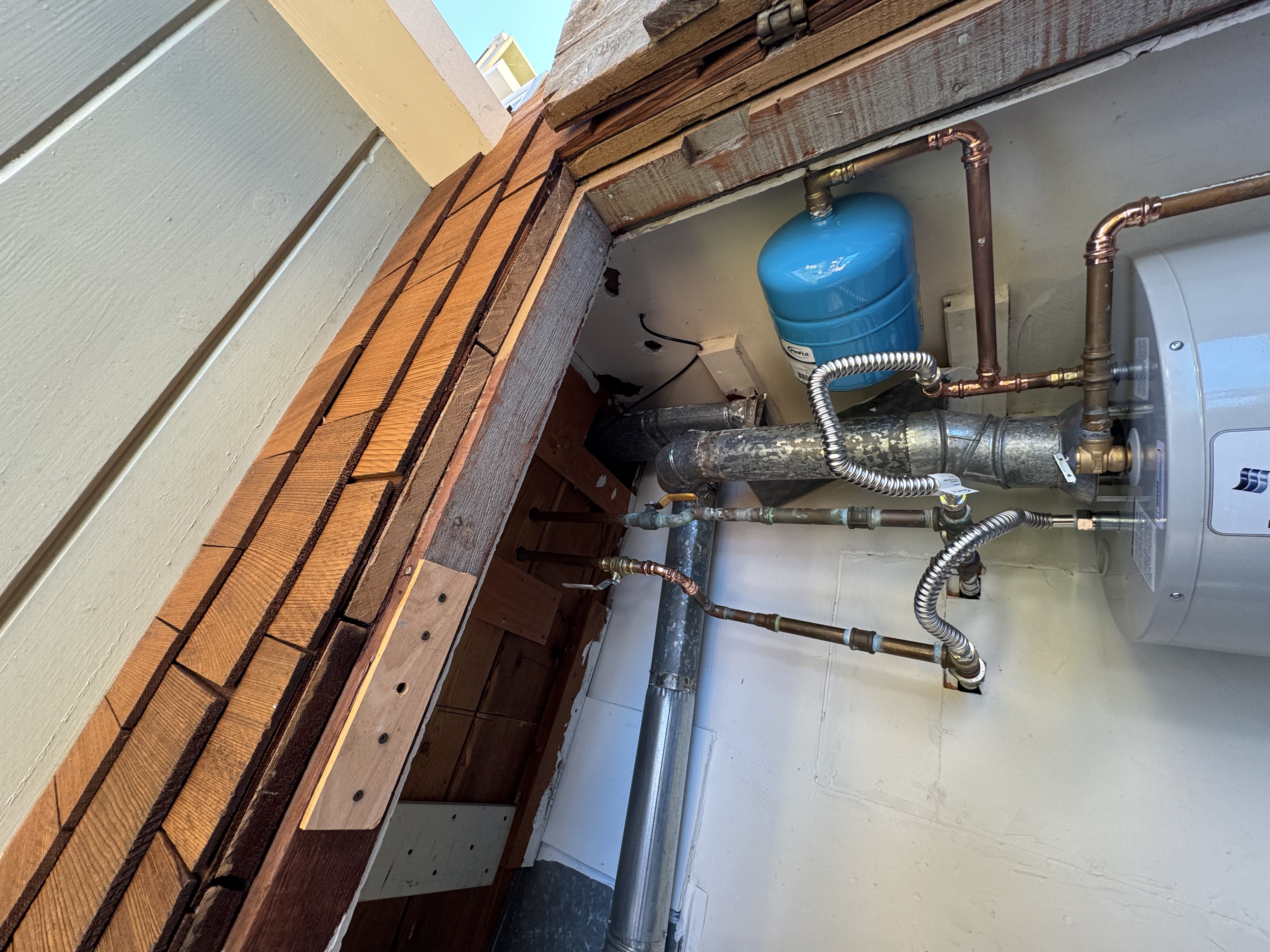
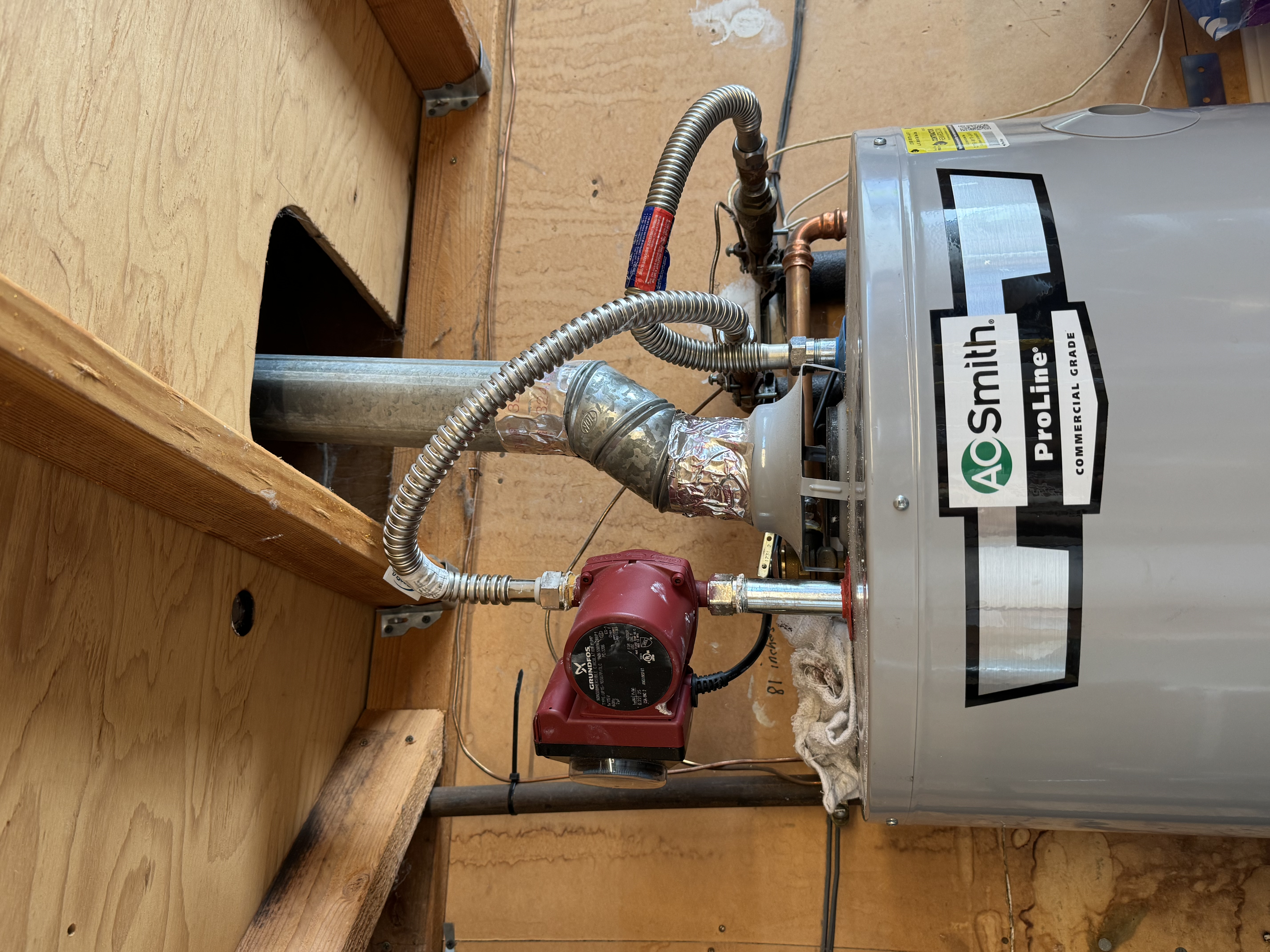
In Kentfield we took out a 75 gallon tank and put in a Navien tankless with a recirculation pump. The homeowner, Sam, wrote that "Tai was there to help us every step of the way." You can read more like that on our reviews page.
What I check on a water heater visit
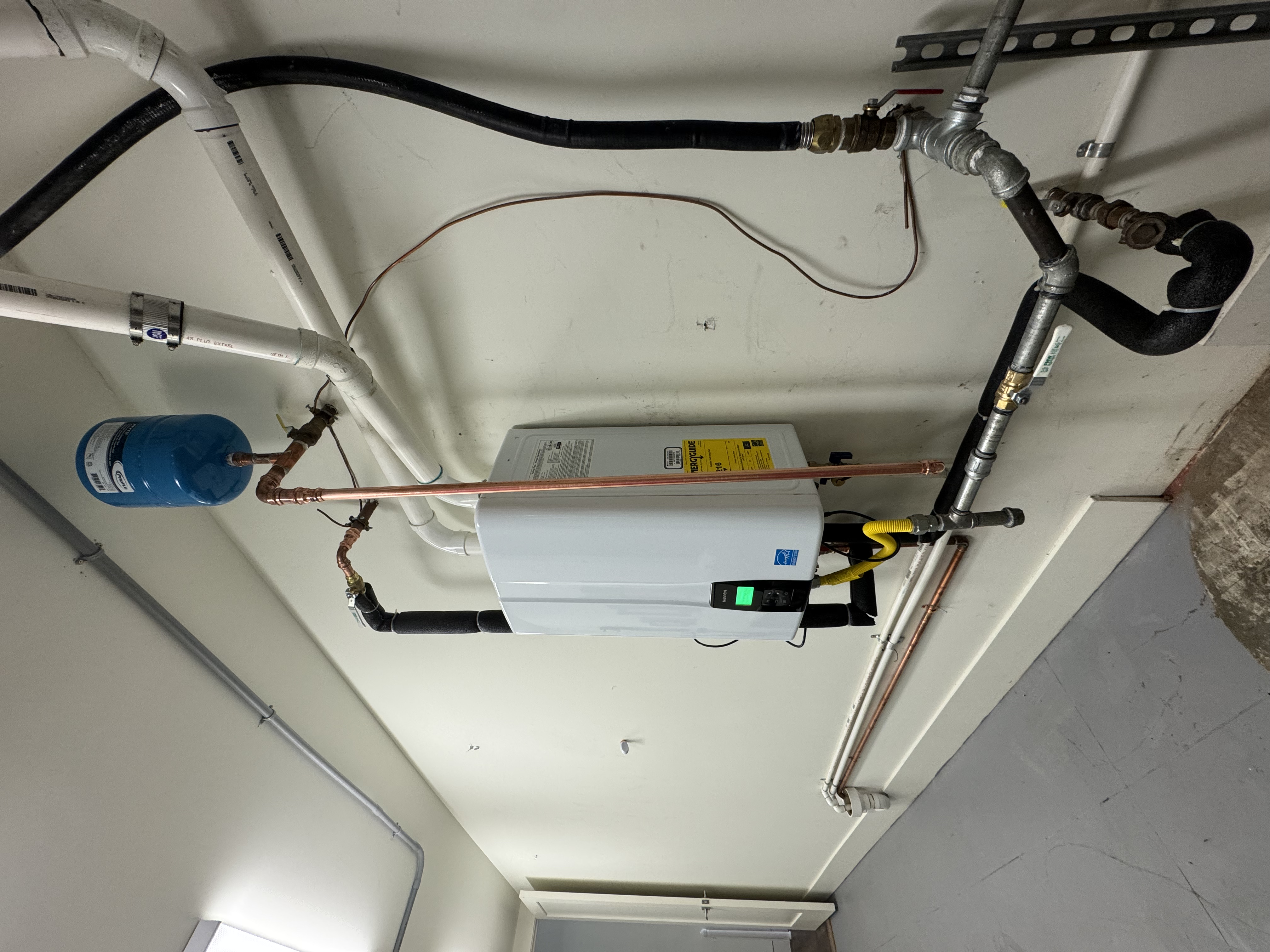
The visit is a $69 diagnostic. On a water heater, this is what I'm looking at:
- The age, from the label on the tank
- Water pressure for the whole house
- Rust, seepage, or water at the base and fittings
- Whether there's an expansion tank and whether it's still working
- The T&P valve and where its drain line goes
- On gas units, the venting, the gas flex, and the sediment trap
- Earthquake straps
- When it was last flushed, and whether the anode rod is due
Then I tell you what I found and what your options are. If you'd like to handle the yearly flush yourself, we'll show you how.
Frequently asked questions
How long do tank and tankless water heaters last?
The U.S. Department of Energy puts a storage tank water heater at 10 to 15 years and a tankless unit at about 20. Where yours lands depends on your water pressure, how it was installed, and whether anyone has flushed it.
Should I replace a water heater that's over 10 years old?
Age alone isn't a reason. If it's dry, heating fine, and there's no rust on the tank, keep using it and start planning for the replacement. If it needs a big repair past that age, putting the money toward a new one usually makes more sense.
Can a water heater last 20 years?
A tankless unit can, and about 20 years is what the Department of Energy expects from one. A tank that reaches 20 is rare and well past the range it was built for, so I'd have a replacement plan ready before it decides for you.
What are the signs a water heater is going out?
Water at the base or rust on the tank, rusty hot water, running out of hot water faster than it used to, and rumbling or popping while it heats. A leak from the tank itself means replacement. The others are worth a diagnostic first.
Does flushing a water heater make it last longer?
Yes. A yearly flush clears the sediment that makes the burner work harder, and it's a good time to check the anode rod that protects the tank from corrosion. If you want to do the flush yourself, we'll walk you through it.
Does high water pressure shorten a water heater's life?
It does. Pressure at 100 PSI or more pushes on the tank and every connection around it all day long. I check pressure on every visit, and if it's high, a pressure regulator and an expansion tank protect the heater and the rest of the house.
How can I tell how old my water heater is?
Look for the label on the side of the tank. The manufacture date is usually on it, sometimes worked into the serial number. If you can't make sense of it, we'll read it when we're out.
How much does it cost to have my water heater checked?
Our diagnostic is $69. It covers a full look at the heater and a whole-house water pressure check, and if something needs work you get a flat rate quote before we start.
Want to know how much life yours has left?
When you call Big Island Plumbing, an owner comes out. The diagnostic is $69, the pressure check is part of it, and you get a flat rate quote before anything else happens. If your heater has years left, I'll tell you that. Water heaters are one part of the plumbing work we do across Marin.